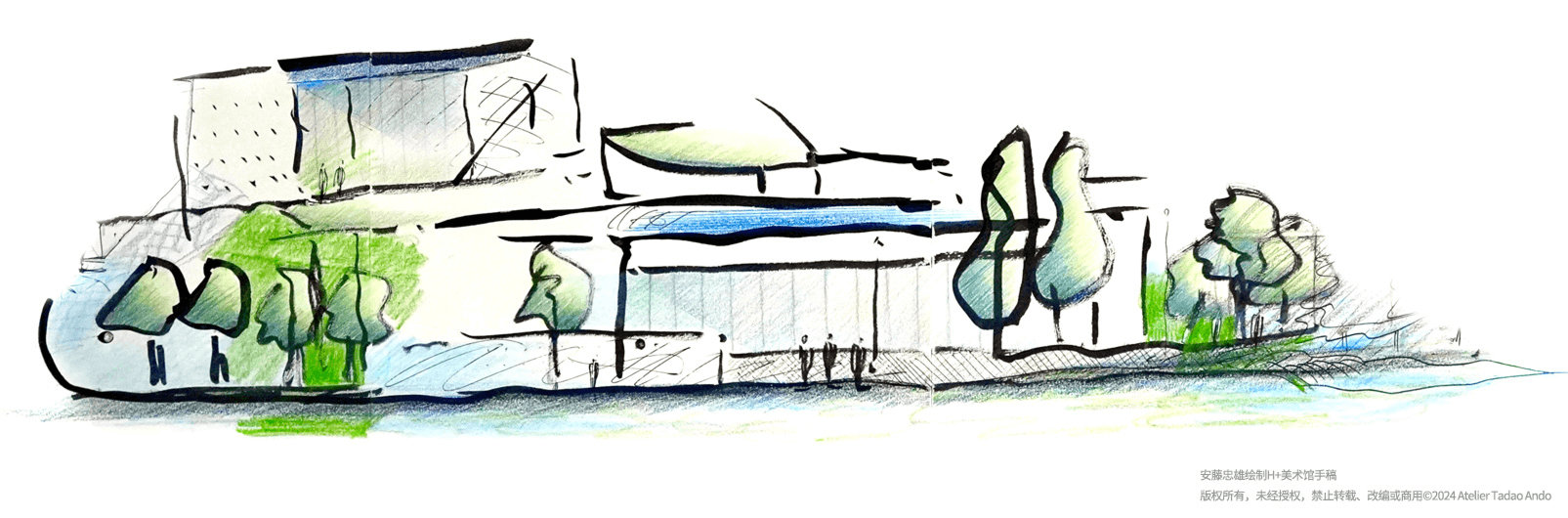
1941 年出生于日本大阪,是当代最具影响力的建筑师之一,以其独特的设计风格和对简约、自然、光影的深刻理解而闻名。他并没有正式接受建筑学教育,而是通过自学和在多个建筑事务所的工作积累了丰富的经验。安藤的建筑设计追求简洁、内敛,并注重建筑与自然环境的和谐融合,尤其擅长使用清水混凝土、木材和玻璃等天然材料,创造出平静的空间感。
安藤忠雄是美国建筑师协会,美国艺术文学学院以及伦敦皇家艺术学院的名誉成员。他同时也是耶鲁大学,哥伦比亚大学,加州大学伯克利分校以及哈佛大学的客座教授。他设计过无数著名的建筑,包括:1976 年建于大阪的"住吉的长屋",获得了 1979 年日本建筑学会大奖;1989年建于大阪的"光之教堂";2001 年建于圣路易斯的普利策基金会美术馆;2001 年建于米兰的阿玛尼剧院;2002 年建立的沃斯堡现代美术馆以及 2007 年建于东京的 21_21DESIGN SIGHT 等等。他曾获得过无数的奖项,包括:1989 年获得法国建筑学院奖赏;1995 年获得普利兹克奖;2002 年获得美国建筑师联盟金牌(AIA 金牌)以及 2005 年获得国际建筑师联盟金牌(UIA 金牌)等等。
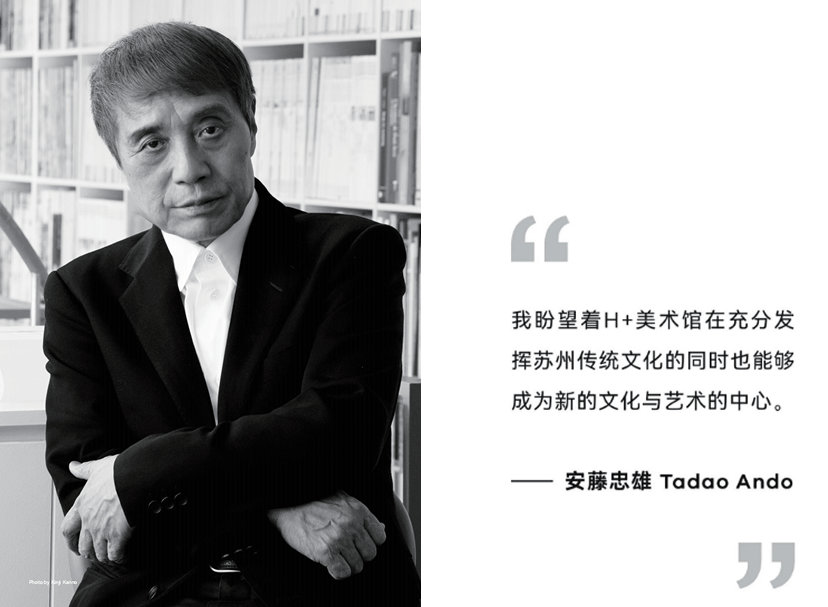
美术馆不仅是承载艺术的空间,更应成为思想交汇、精神沉淀的场域。H+ 美术馆的诞生,源于一种朴素而坚定的信念:艺术不应仅被观看,而应被感知、被思考、被体验,最终融入人的日常生活与精神世界。H+ 美术馆通过简洁而富有张力的空间语言,让建筑去回应时间与城市的记忆。它不喧哗,却能引发深层的感知不指向形式的奇观,而是引导人与自身、与城市、与艺术展开更深度的对话
Born in Osaka, Japan in 1941, Tadao Ando is one of the most influential contemporary architects, globally-known for his unique design and profound understanding of simplicity, nature, and the interplay of light and shadow. He is largely self-taught, having gained his experience working at multiple architecture firms rather than through formal education. Ando's architectural approach emphasizes clarity and restraint, focusing on harmonious integration with the natural environment. He is especially known for his masterful use of natural materials such as concrete, wood, and glass to create serene and contemplative spaces.
Ando is also an honorary member of the American Institute of Architects, the American Academy of Arts and Letters, and the Royal Academy of Arts in London. He has served as a visiting professor at Yale University, Columbia University, the University of California, Berkeley, and Harvard University. Among his numerous renowned architectural works are the Azuma House in Sumiyoshi, Osaka (1976), which won the Architectural Institute of Japan Prize in 1979; the Church of the Light in Osaka (1989); the Pulitzer Arts Foundation in St. Louis (2001); the Armani Theatre in Milan (2001); the Modern Art Museum of Fort Worth (2002); and the 21_21 DESIGN SIGHT in Tokyo (2007), among many others. Ando has received numerous prestigious awards, including the Grand Prize from the French Académie d'Architecture (1989), the Pritzker Architecture Prize (1995), the American Institute of Architects Gold Medal (2002), and the International Union of Architects Gold Medal (2005), and more.
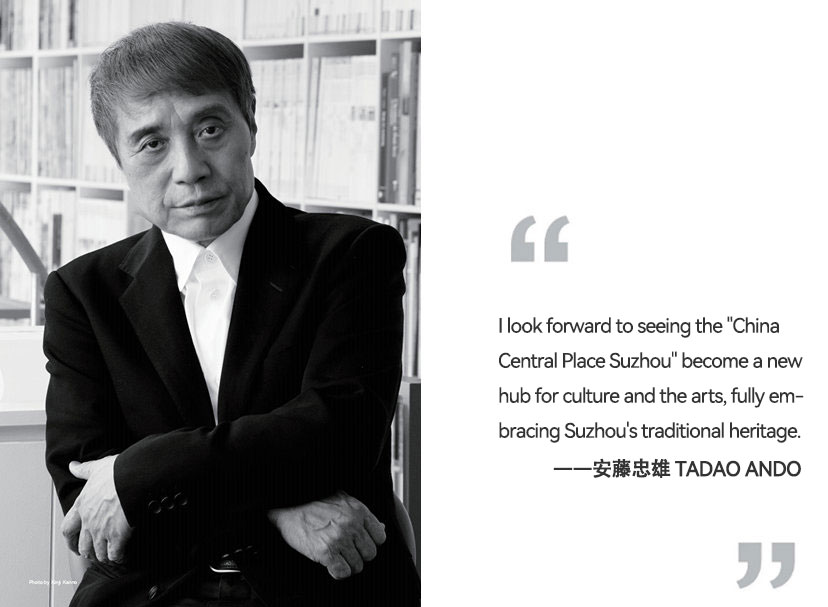
A museum is not merely a space for housing art, but should also serve as a dynamic forum for the convergence of ideas and a place for spiritual reflection. H+ Art Museum was founded on a simple but firm belief: art is not only meant to be seen. It should be felt, reflected on, and experienced, becoming part of our daily lives and inner worlds. Through a minimal yet expressive spatial language, H+ Art Museum allows architecture to reconnect with time and the memory of the city. It aims to evoke deeper perception beyond surface form, encouraging a meaningful dialogue — between people, the city, and art.